Investing in “special sits” with conviction in Europe’s fragmented real estate markets
Accessibility
Stefano Giardina, Managing Director, Real Estate and CIO, Arrow Germany
I see European private real estate entering a distinct new phase. For years many global investors, especially North American institutions, devoted disproportionate capital to their domestic markets in preference to continental Europe and the United Kingdom. Today they are reconsidering that position. Turbulence in the United States, along with wider geopolitical and macroeconomic uncertainty, has drawn attentive allocators towards Europe’s fragmented and often inefficient markets.
“As that capital shifts, investors are looking for partners who already understand each micro-market in depth, which is exactly where Arrow Global’s deep local relationships and proprietary operating platforms give us an edge.”
Because we built this infrastructure well before the current cycle, we can evaluate highly granular opportunities, supported by data and on-the-ground expertise, and deploy capital with genuine conviction.
Our own approach is deliberately disciplined. Each investment thesis begins with an analysis of structural forces that shape demand and supply. Once our central team reaches conviction, we use our local operating platforms to quickly verify every detail. The advantage of that integrated model is speed and assurance in periods when broader liquidity is thin. That approach enabled us to acquire a “special sit” in Leipzig while many bidders were sidelined. Limited competition allowed us to secure an attractive entry basis. We then introduced conservative leverage with longstanding relationship banks that value the margin of safety embedded in our underwriting. Those same banks have witnessed our practice of providing a larger equity cushion than headline ratios imply, which enhances their willingness to finance our plans on favourable terms.
Decision making never deviates from that core playbook. We require rigorous homework and multi-layer debate, nonetheless we can move from origination to closing within compressed time frames because all knowledge resides within one ecosystem. External advisers can be useful, but incentives can sometimes diverge from investors’ interests. By keeping underwriting, technical diligence, structuring and asset management together, we avoid misalignment and ensure that every voice around the table shares the ultimate objective of capital preservation and value creation.
A recent illustration is a senior living development in Munich that was offered by an insolvency administrator with virtually no reps & warranties. The nature of the sale meant it was truly “buy what you see”. Within hours our German development company, formerly known as Interboden, placed engineers on site to confirm that every pipe, cable and fire exit matched the approved plan. Any hidden defect would have remained ours after closing.
“Because all relevant capabilities sat under one roof, we completed diligence in days and provided the insolvency administrator with the certainty and pace required to maximise recovery.”
That reliability of execution often proves decisive when sellers must navigate complex stakeholder environments or court processes.
Structurally resilient sectors receive priority. We largely focus on all sorts of “Living” assets (e.g. BTS resi, senior living, PBSA, etc.) as well as community-oriented retail, and well located hotels and resorts. These segments benefit from clear underlying support: housing shortages, demand for convenience-led retail, and tourism flows that continue to grow across Southern Europe. We remain cautious on asset classes whose performance depends heavily on global trade or rapid technological change. Large warehouses in core corridors can still offer value, yet yields have compressed, and redevelopment competition is intense, so selectivity is paramount.
Balancing top-down insight with bottom-up evidence is essential when pricing risk. The process begins by studying what already works inside our existing portfolio. For instance, we own and operate residential and hospitality assets across Portugal, Spain and Italy where our teams have repeatedly delivered strong cash yields and capital gains. From that vantage point we test macro themes such as ageing populations, asset obsolescence and adaptive use, evolving tourist behaviour and limited housing supply. Local platforms proactively feed real-time data into investment committee and risk forums, creating a feedback loop that keeps the macro narrative anchored in reality rather than conjecture.
Institutional investors sometimes ask whether there remains a meaningful distinction between core and peripheral Europe. My answer is that these labels lose relevance when you operate proprietary platforms on the ground. Portugal, Italy and Spain are as integral to our strategy as France, Germany and the United Kingdom.
“The precondition for investment is not geography but our ability to add operational value. If we cannot influence outcomes, we pass. If we can, we commit with full conviction.”
Creating value spans the entire lifecycle of a transaction. Proprietary origination delivers off-market opportunities that competitors never see. Cross-functional collaboration refines each thesis before capital is at risk, testing assumptions against experience gathered across local platforms. Underwriting deliberately incorporates additional contingency, or what we call margin of safety, to absorb macro and/or asset-level shocks. Once ownership commences, specialists within Arrow Global translate the business plan into daily execution, from permitting and construction oversight to leasing and asset management. No single capability is sufficient on its own; outperformance is truly a team effort and arises from the alignment of every discipline towards one goal: sustainable value.
From a portfolio-construction perspective, real estate remains under-represented in many institutional allocations after pandemic disruption, inflation surprises and higher financing costs. Valuation adjustments and the retreat of bank lending have combined to make high-quality, income-producing assets available at historically compelling prices. Investors able to supply flexible capital, combined with operational know-how and the ability to move quickly can unlock mis-priced situations and capture attractive risk-adjusted returns. Despite US tariffs, sluggish growth and inflation risks, I believe the present window may prove one of the most favourable entry points of the last decade for those prepared to embrace complexity and commit resources to intensive asset management.
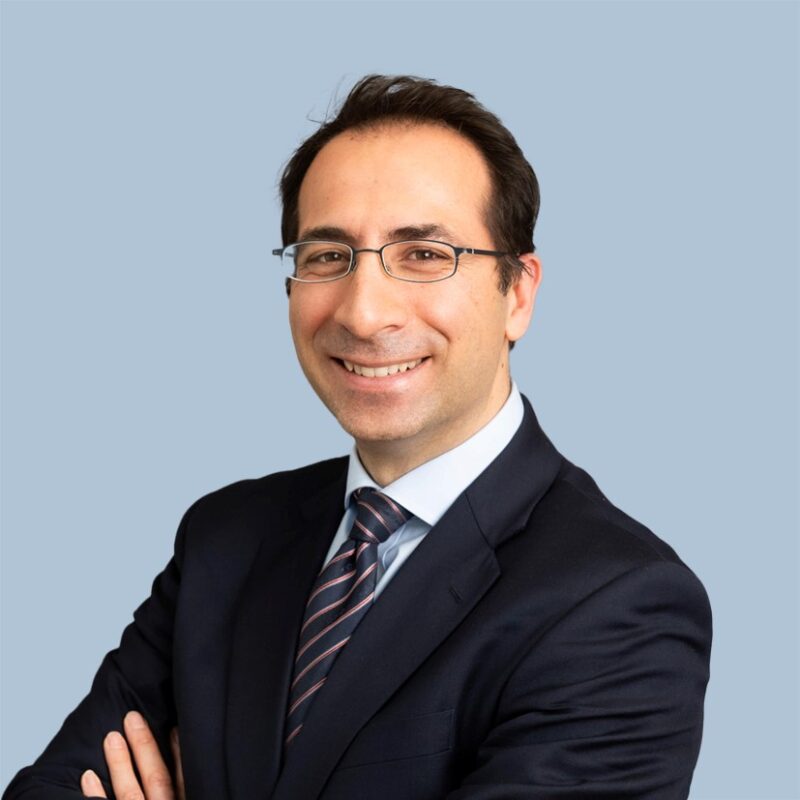
Stefano Giardina
Managing Director, Real Estate and CIO of Arrow Germany
Stefano Giardina recently joined Arrow Global to help grow the company’s real estate business in Continental Europe.
With over 20 years of experience in real estate, Stefano began his career at Citigroup Investment Banking in London and New York, where he was involved in a broad range of real estate underwriting, structuring, and deal execution across EMEA and North America. He later joined Citigroup’s real estate private equity arm, where he was responsible for originating and investing across Continental Europe. Most recently, he worked at ALTERX, a real estate operating partner backed by The Baupost Group, where he led investments and strategic asset management in the DACH region.
Stefano holds a Master of Science from ESCP Business School and a Laurea Magistrale (master’s degree level) in Political Science from the University of Turin.